Please enter the code we just sent to whatsapp 91-11-46710500 to proceed
Didn't Receive OTP?
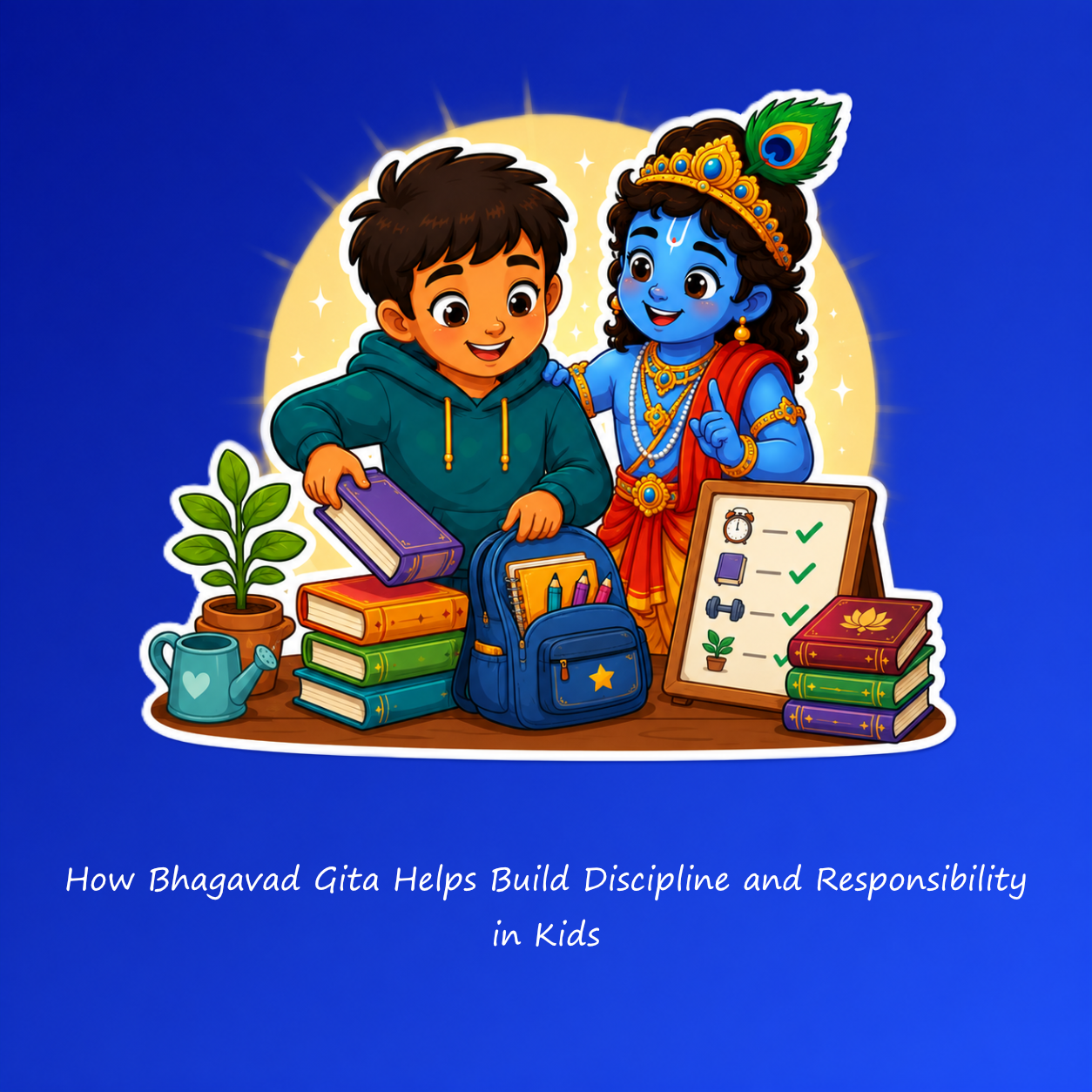
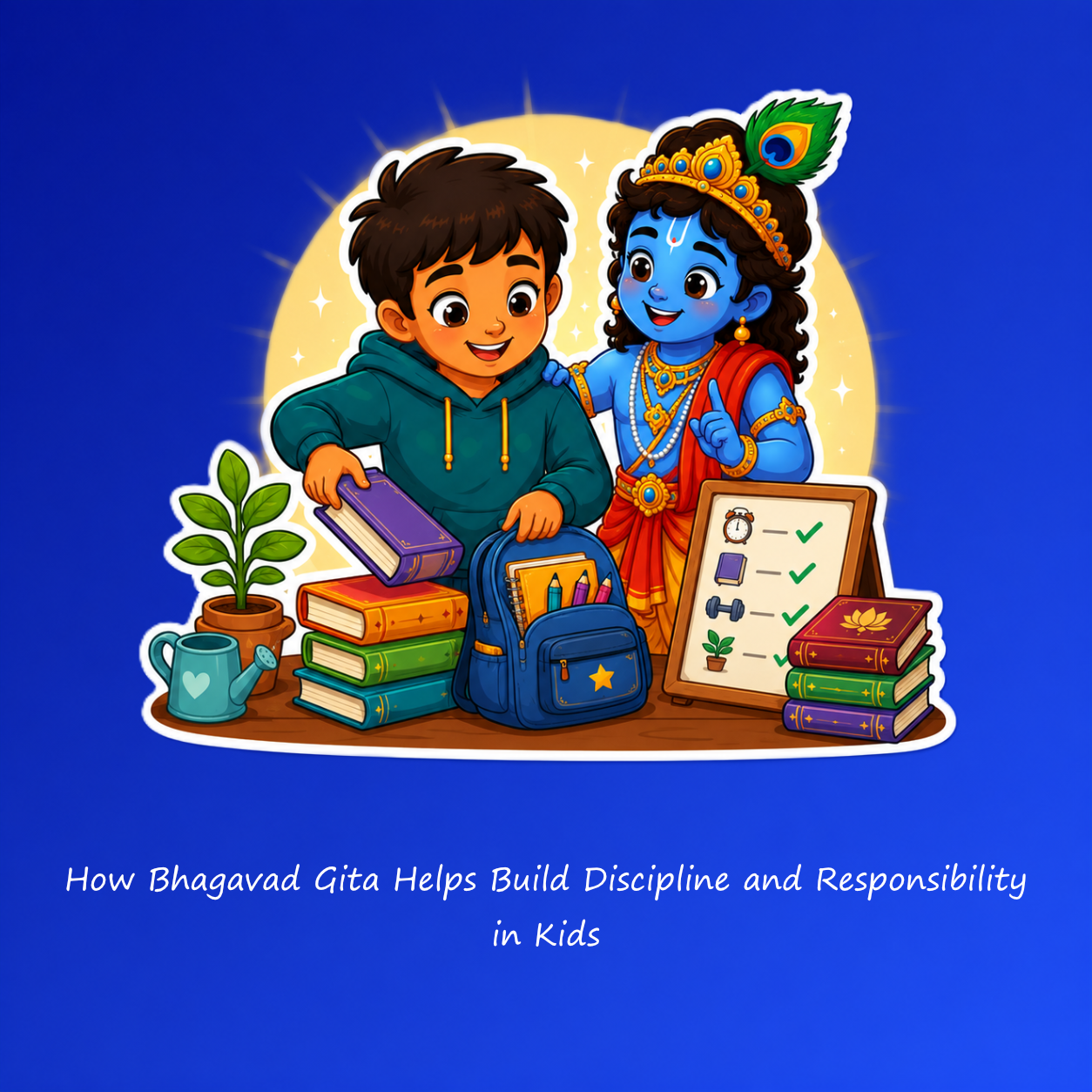
Discipline is not about strict rules or punishment. It is about helping children make good choices, stay committed to their responsibilities, and develop healthy habits.
Children who learn self-discipline often:
This is why discipline for kids through Bhagavad Gita remains relevant even today.
One of the most important messages in the Bhagavad Gita is the importance of performing one’s duties sincerely. Lord Krishna teaches Arjuna to focus on his responsibilities instead of worrying about the outcome.
For children, this lesson can be applied in everyday life.
They learn to:
These teachings encourage children to focus on effort rather than immediate rewards, helping them develop lasting self-discipline.
Many parents wonder how to teach responsibility in children. The answer often lies in everyday habits.
The Bhagavad Gita emphasizes taking ownership of one’s actions. Children can begin practicing responsibility through simple tasks such as:
When children understand that their actions have consequences, they gradually become more accountable and dependable.
One of the biggest challenges children face today is managing distractions. Whether it is excessive screen time, social media, or entertainment, maintaining focus can be difficult.
The Bhagavad Gita teaches the importance of controlling the mind and senses. While children may not fully understand complex spiritual concepts, they can easily grasp practical lessons such as:
These habits contribute significantly to self-discipline for kids and help them make wiser choices.
Good habits form the foundation of a disciplined life. The teachings of the Bhagavad Gita encourage consistency and commitment, which are essential for habit formation.
Parents can use Gita lessons to motivate children to:
When these habits are repeated daily, discipline becomes a natural part of a child’s personality rather than something imposed from outside.
Children learn best when lessons are connected to everyday experiences.
For example:
These practical conversations help children understand how Bhagavad Gita teachings apply to real life.
Children learn discipline by observing the adults around them. Parents and teachers play a crucial role in shaping responsible behavior.
Here are a few ways adults can support character building:
When children receive guidance in a supportive environment, they are more likely to embrace discipline willingly.
Success in life depends on much more than academic performance. Children also need values, resilience, accountability, and emotional maturity.
The Bhagavad Gita helps children develop:
These qualities contribute to strong character development and prepare children for future challenges.
Discipline is not built overnight. It develops through small daily actions, consistent practice, and positive guidance.
The teachings of the Bhagavad Gita provide children with practical tools to:
Over time, these lessons help children become more responsible, confident, and independent individuals.
In a world filled with distractions and constant change, children need guidance that helps them stay grounded. The values taught in the Bhagavad Gita remain relevant because they focus on qualities that never go out of style.
By learning discipline for kids through Bhagavad Gita, children gain life skills that support success in school, relationships, and future careers.
They learn that true success comes not only from talent but also from responsibility, consistency, and the willingness to do what is right.
While parents can introduce these teachings at home, structured learning can make the experience more engaging and effective.
Bambinos.live offers interactive online Bhagavad Gita classes designed specifically for children. Through age-appropriate lessons, discussions, and activities, children learn valuable life skills, develop strong character, and understand how to apply Gita teachings in their daily lives.
By making learning enjoyable and meaningful, Bambinos helps children build discipline, responsibility, confidence, and values that stay with them for a lifetime.











 Unbox English
 Sanatan Unboxed
 Gita for kids
 Alpha Math