Please enter the code we just sent to whatsapp 91-11-46710500 to proceed
Didn't Receive OTP?
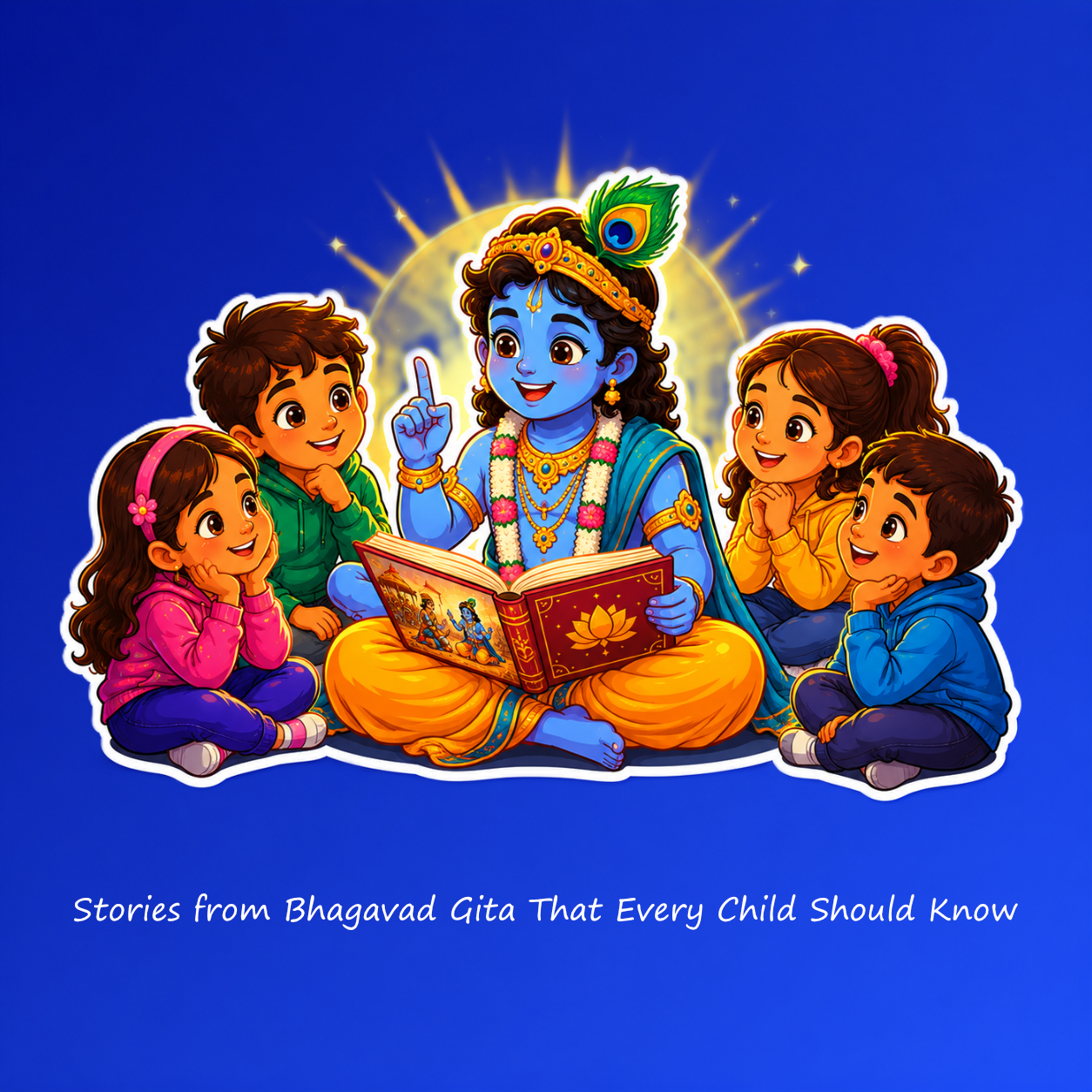
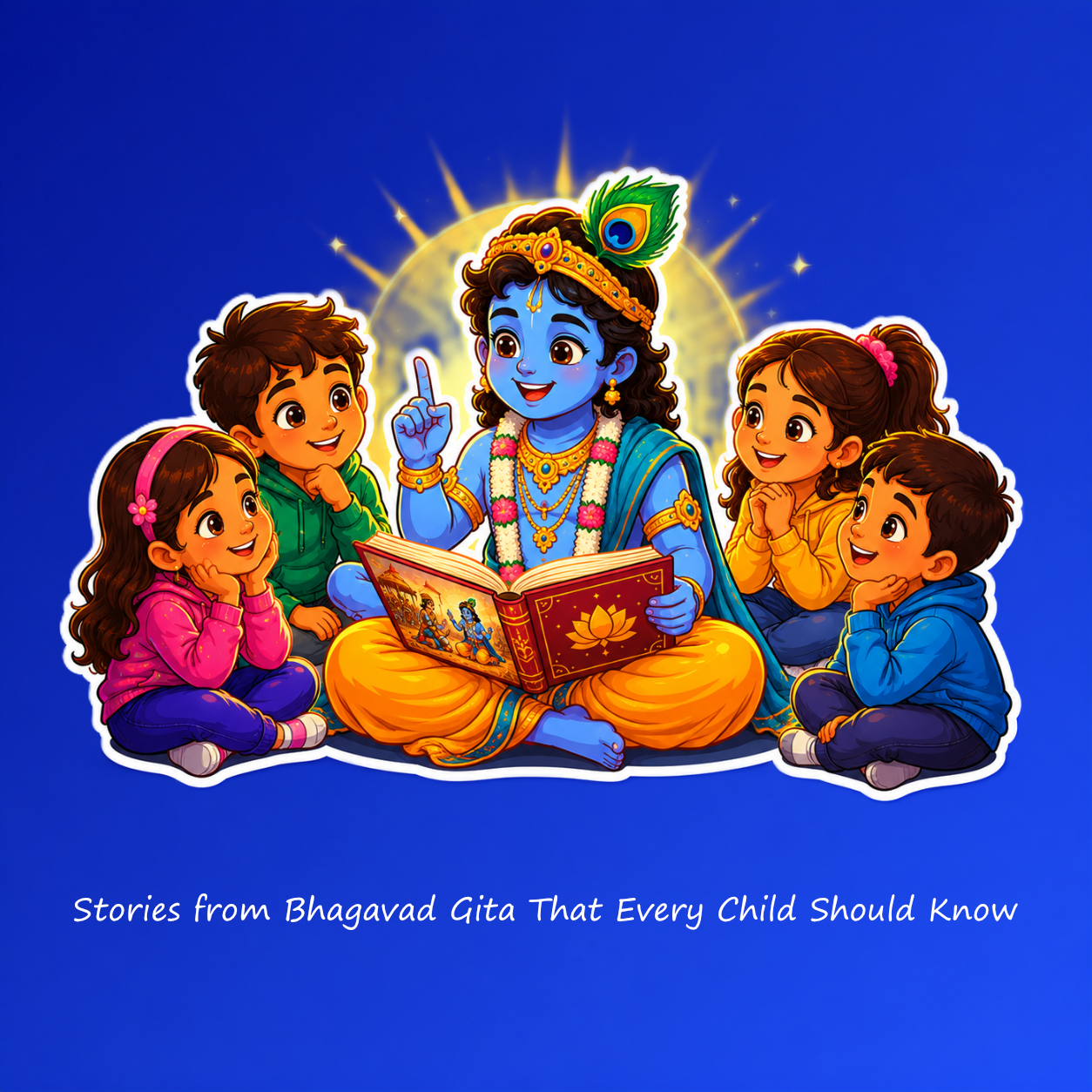
We all have heard this story. This story is the foundation of the Bhagavad Gita. Pandava Prince Arjuna is standing on the battlefield. He is a brave warrior, but when he sees his teachers, relatives, and friends on the opposite side, he becomes confused and sad. He puts down his weapons and refuses to fight against his own elders. He does not know what is right. Should he fight for justice, or should he step away because he does not want to hurt anyone?
When kids listen to this story, they understand that many a times in life they will be in a state of indecisiveness where right and wrong can get very confusing. And, it is very normal to feel overwhelmed in such conditions, even strong and intelligent people can feel confused.
In such cases, they should not hide their feelings and seek advice from their elders or well-wishers just like Prince Arjuna did.
For children, this story can be connected to everyday situations. For example, a child may feel confused about telling the truth after making a mistake. Like Arjuna, the child can learn to pause, think, and seek guidance.
There are two learnings to take away from this story. First being that, in the battle field, be it of Kurukshetra or of life, one has to fight for himself. God can be your guiding light, He can steer you in the right directions, but He will not fight your battle. A man can make or break his life only through his actions.
Second lesson to take away from this story is humility. Although powerful and divine, Lord Krishna chooses to become Arjuna’s charioteer. He does not sit like a king or command from far away. He holds the reins of the horses and guides Arjuna through the battlefield.
This is one of the most beautiful Krishna stories for children because it teaches humility and service. This is one of those Krishna stories for children which shows that true greatness is not about position or power. It is about helping others when they need support. By becoming a charioteer, Krishna teaches that no work is small when it is done with love and purpose.
Children often think leadership means being first, giving orders, or winning. This story shows them a different meaning of leadership. A true leader helps others, listens carefully, and guides them towards the right path.
This is one of the many Krishna stories for children which point to the importance of Karma and work in our life. Children often assume that there are elders and teachers around them who will help them with their projects and assignments. They will provide them; will all the material to do their work upon. This habit can be particularly harmful in later stages of life when in a job or in higher studies, they will have to do a bigger load of work and on their own. It may lead them to stress and anxiety and can hamper their performance and mental health. Such Krishna stories for children tell them that they can expect guidance and support from their elders, but the actual work should be done by them only.
One of the most beautiful parts of the Gita is the relationship between Krishna and Arjuna. Krishna is not only a divine teacher; he is also Prince Arjuna’s friend, charioteer, and guide. He listens patiently and explains difficult ideas in simple ways.
This is one of the most inspiring Krishna stories for children because it shows that a true friend helps us become better. Krishna does not scold Arjuna for being afraid. Instead, he encourages him to understand his duty and act with courage.
A good friend guides us towards the right path. He does not have the only aim to please us. Many a times, Lord Krishna asked Prince Arjuna to do things that he did not like, including to fight in the battle of Kurukshetra against his will. This teaches children that times may come, where we might not find what our friend is advising; uncomfortable or opposite to what we are thinking. But, a true friend will never say things only to please you and one should respect and appreciate that.
This Krishna story for children also tell us that, we as a friend should always behave like Lord Krishna. We should also try to be good friends by supporting others, speaking kindly, and helping them make good choices.
Choosing good is not always easy. For example, choosing to limit yourself to one candy is tougher than binge eating the whole packet. Similarly, in the Bhagavad Gita story for children, Prince Arjuna had two choices: he could avoid the difficult situation, or he could stand up for justice. Krishna helped him understand that the right path may not always be easy, but it is important.
Children often face similar choices in small ways. Should they copy homework or complete it honestly? Should they laugh when someone is teased or speak up kindly? Should they hide a mistake or tell the truth? Krishna Stories for children encourage the children to always choose good over bad, right over wrong ,; even when choosing latter seems the easier option.
In Bhagavad Gita, one of the stories is about a tortoise. Krishna gives Prince Arjuna the example of a tortoise. When the tortoise senses danger, it pulls its limbs inside its shell. Similarly, a wise person learns to control the senses and avoid wrong temptations. One should know when to react and when to retract. This story for children becomes even more relative in today’s world, where everyone is sitting on the ledge and loses his temper at the blink of an eye.
This story gives children a clear picture of self-control. Children may want to eat too many sweets, watch too many cartoons, play games for too long, or speak angrily when upset. The tortoise story teaches them to stop and think before acting.
Self-control does not mean children should never enjoy anything. It means they should learn balance. They can enjoy games, food, and fun activities, but they should know the right time and limit.
Most importantly, The Gita does not force Arjuna to act blindly. Krishna explains, reasons, and guides him. At the end, Arjuna reflects and makes his own decision. This is a beautiful model for education. Children should not only memorise values; they should understand them. They should be encouraged to ask, discuss, imagine, and reflect. This makes value-based learning more meaningful.
This gives us a clear idea that Bhagavad Gita stories for kids are not just religious stories. And this was just the tip of the iceberg. The Bhagavad Gita is a vast ocean where there are numerous pearls of wisdom buried within. These Krishna stories for children are lessons in emotional strength, responsibility, focus, kindness, and wise decision-making. They help children understand how to face confusion, manage fear, respect others, and do their best.
When taught in a child-friendly way, these stories become powerful tools for moral education. They connect ancient Indian wisdom with modern learning needs. Through stories of Krishna and Arjuna, children learn that every challenge can become an opportunity to grow.
In today’s fast-changing world, such life lessons for children are more important than ever. The Gita reminds every child: do your best, choose what is right, respect others, and keep learning with an open heart. By sharing these Krishna stories for children, parents and educators can help young learners build strong values and thoughtful minds. We at Bambinos can do this for you in a child friendly, engaging, and long lasting way. We offer carefully designed, age appropriate content, and trained, professional educators who understand child psychology very well. Come, be a part of the Bambinos family and change your kid’s life for better. Contact us for more details.









 Unbox English
 Sanatan Unboxed
 Gita for kids
 Alpha Math