Please enter the code we just sent to whatsapp 91-11-46710500 to proceed
Didn't Receive OTP?
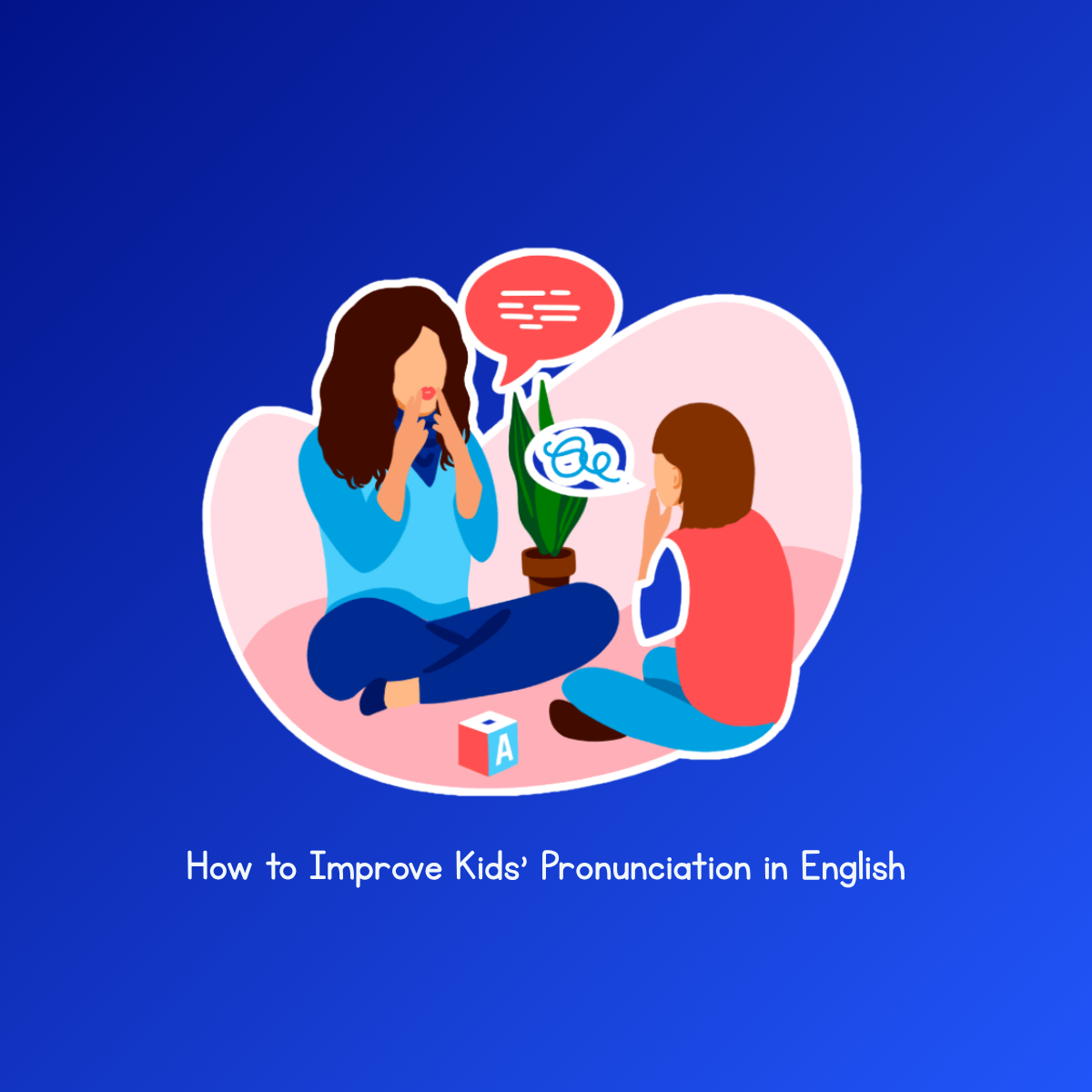
Clear pronunciation is one of the most important building blocks of effective communication. When children learn to pronounce words correctly from an early age, they not only sound more confident but also understand the language better. Many parents focus heavily on vocabulary and grammar, but spoken English clarity often gets overlooked.
If you’re wondering how to improve English pronunciation for kids, the good news is that it doesn’t require complicated methods. With the right mix of consistency, fun, and guidance, children can develop strong pronunciation skills naturally.
Let’s explore practical, child-friendly ways to make this journey smooth and enjoyable.
1. Start with Listening Before Speaking
Children absorb language just like they did when they first began speaking, through listening. Instead of immediately correcting them, let them hear clear and correct English regularly.
You can introduce this through
Encourage them to notice how words are pronounced. This gradually creates a strong and natural base for clear pronunciation without any stress.
2. Use Phonics as the Base
One of the most effective methods to improve English pronunciation for kids is through phonics for kids. Phonics teaches children the relationship between letters and sounds.
For example:
When children understand sounds instead of just memorizing words, their pronunciation becomes clearer and more accurate.
Practice blending sounds:
This strengthens both reading and pronunciation.
3. Break Words into Syllables
Long words can be tricky for children. Breaking them into smaller parts makes them easier to pronounce.
Example:
Clap along with syllables to make it fun. This simple trick improves rhythm and clarity in speech.
4. Encourage Slow and Clear Speech
Many children tend to speak quickly, which can reduce clarity. Help them understand that speaking slowly is not a drawback, but actually a sign of strong communication.
You can guide them by:
This helps develop better spoken English clarity over time.
5. Practice Through Daily Conversations
Real-life conversations are the best pronunciation practice for children. Instead of formal lessons, try:
Gently correct mistakes without interrupting their flow.
6. Use Mirror Practice
This is a surprisingly effective technique.
Ask your child to:
Certain sounds like “p,” “b,” and “m” involve visible lip movement, which helps children self-correct.
7. Make It Fun with Games
Children learn best when they’re having fun. Turn pronunciation into a game rather than a task. This strengthens pronunciation while keeping children engaged.
Try:
8. Read Aloud Every Day
Reading aloud is one of the simplest ways to improve pronunciation.
Start with:
Guide them to:
Over time, this builds fluency and confidence.
9. Correct Gently, Not Constantly
Frequent correction can make children feel unsure about speaking. What matters is finding the right balance. Instead of saying, “That’s wrong,” you can gently guide them by saying, “Let’s try saying it this way.”
Positive encouragement helps build confidence, and when children feel confident, they speak more. With more practice, their pronunciation improves naturally.
10. Use Repetition Without Boredom
Repetition is important, but it should not feel boring or forced. Instead of repeating the same word again and again, you can
• Use it in different sentences • Turn it into a short story • Include it in fun games
For example, take the word “beautiful”
• “The flower is beautiful.” • “Your drawing is beautiful.”
This way, children learn the correct pronunciation in a natural and meaningful manner.
11. Build Confidence Alongside Skill
Pronunciation is not only about saying words correctly, it is also about speaking with confidence.
Encourage your child to:
• Speak in front of family • Take part in small presentations • Share their own stories
When children feel confident, their speech becomes clearer in a natural way.
12. Be Patient and Consistent
Every child learns at their own pace. Some sounds take time to master, and that’s perfectly normal.
Consistency matters more than perfection:
Over time, you’ll notice a big difference.
Final Thoughts
Helping children develop clear pronunciation is not about strict correction, but about creating a supportive environment. Through listening, phonics, regular practice, and encouragement, you can gradually improve English pronunciation for kids while keeping the process enjoyable.
Keep in mind that the aim is not only correct pronunciation, but also confident communication and strong spoken English clarity.
A Gentle Note for Parents
If you are looking for structured and engaging ways to support your child’s language development, programs that combine phonics, storytelling, and interactive speaking activities can make a real difference.
Many parents today are turning to platforms like the Bambinos.live program, where children learn in small groups through fun activities and regular speaking practice. What makes these programs effective is the way they bring together phonics for kids, storytelling, and real conversations, helping children develop pronunciation skills naturally without pressure.
It is not about increasing study time, but about making learning meaningful, interactive, and something your child genuinely enjoys.
Rita is an experienced educator specializing in Gita, and English, known for her engaging teaching style and supportive classroom environment. Along with her passion for teaching, she actively writes articles and stories that reflect her creativity and love for learning. Rita focuses on understanding every student’s individual needs, helping them gain confidence, stay motivated, and build a strong academic foundation. Through her guidance, learners develop essential skills and unlock their highest potential. For her, every student is a unique story waiting to be written, and she feels grateful to play even a small part in helping them discover their brightest chapter.














 Unbox English
 Sanatan Unboxed
 Gita for kids
 Alpha Math